Pneumatic Air Scissors Replacement: Match Your Cutter Head
The cylinder outlives the head — but heads are not interchangeable between standards. Here is how to identify the one on your machine.
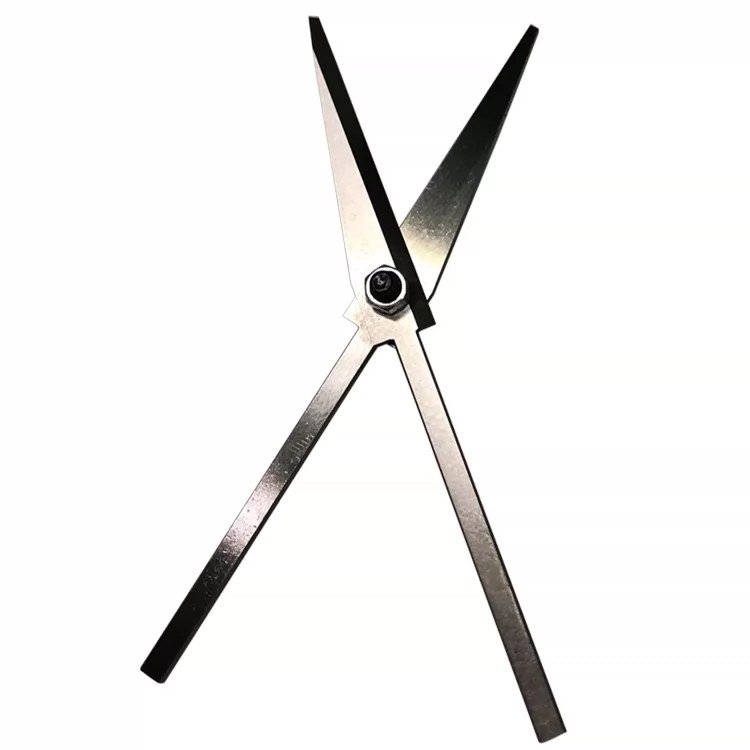
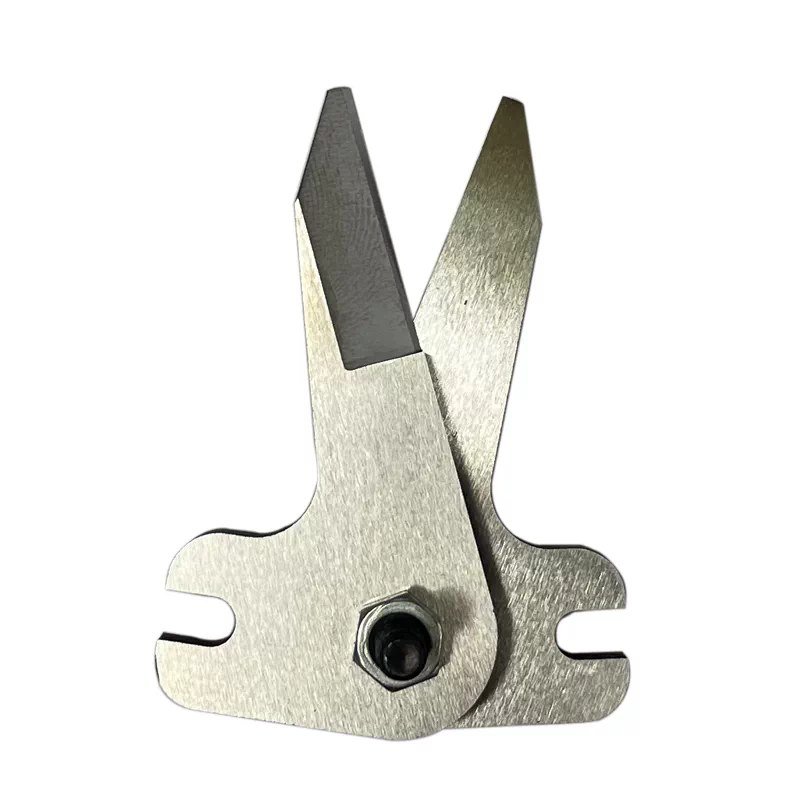
A mask machine air scissors is three parts: the cylinder body, the cutter head, and the blade pair inside it. The cylinder is rated for millions of strokes and outlives everything else on the assembly. The head and its blades are the consumable — and on most lines they are what you actually need to re-order.
The catch is that heads are not interchangeable between “standards”. Two heads that look identical on a bench can differ by a few millimetres of blade length or a couple of degrees of jaw opening, and the wrong one either will not mount or will not cut cleanly. Here is how to identify the head you actually have.
Cutter head models and sizes
| Model | Head length | Jaw opening |
|---|---|---|
| Standard cutter head | 129 mm | 40 mm / 56 mm |
| Pro cutter head | 114 mm | 40 mm / 56 mm |
| Pro cutter head (short) | 90 mm | 40 mm / 56 mm |
| Pro Max cutter head | 114 mm | 40 mm / 56 mm |
| Pro Max cutter head (short) | 90 mm | 40 mm / 56 mm |
| Titanium-coated cutter head | 112 mm | 40 mm / 56 mm |
The full air scissors and cutter head range, with dimension drawings for every head, is on its own page.
The three numbers that identify a head
- Head length — measured across the closed blades, tip to tip. This is the dimension that has to clear the machine frame, so it is the one that must match exactly.
- Jaw opening — 40 mm or 56 mm in the heads we supply. This sets how much material the blades can take in a single stroke, and it is set by the cylinder stroke, not the head alone.
- Pivot and mounting — the bolt or pin diameter at the pivot, and the mounting pattern where the head meets the cylinder.
If you have the head in your hand, calipers on the blade length and a photo of the mounting end are enough for us to match it.
Standard, Pro, Pro Max, titanium-coated — what actually differs
The names describe the head geometry and the blade treatment, not marketing tiers:
- Standard (129 mm) — the longest reach. Used where the cutting station sits further from the web.
- Pro and Pro Max (114 mm / 90 mm) — shorter, stiffer heads for higher-speed lines where deflection at the tip is what blunts the edge.
- Titanium-coated (112 mm) — a coated blade face for the abrasive webs and the materials that build up on a plain steel edge. Longer running time between blade changes.
When to replace the head, and when to replace only the blades
In most cases you only need the blade pair. The head body is a machined part that does not wear unless it has been misaligned or dropped. Replace the pair — not one blade — when you see:
- Ragged or pulled cuts on the ear-loop instead of a clean shear.
- Material building up on the blade face, or the cut stalling mid-stroke.
- Visible nicks or a rounded bevel on the cutting edge.
- A cut that is clean cold and ragged after the line warms up (that is the pair no longer matching).
Replace the head when the pivot is loose, the mounting face is distorted, or the blades no longer close to a consistent gap. Replacing the head costs a fraction of replacing the whole air scissors unit, which is the point of a replaceable-head design.
What these heads cut
- Meltblown and spunbond nonwoven, including multi-layer stacks.
- Elastic ear-loop tape and headband material.
- Nose-wire and edge trimming on N95 / KN95 lines.
- General nonwoven converting: wipes, hygiene products, bags and pouches.
These are shears for soft, abrasive webs, not for sheet metal. Tell us what you are cutting and we will spec the blade edge for it.
If the head has no marking left
Send it. We measure the head, redraw it with full GD&T, and ship a free sample head to test on your own machine before you commit to a run. That is the same process we use for reverse-engineering a worn blade, and it works from a worn part with no paperwork at all.
How ordering works
- Quote within 24 hours from a photo or the worn head.
- Free sample — fit it on your line before you commit. You cover the freight.
- Sample in 7–10 days, production in 30 days from drawing approval.
- MOQ 100 pcs for production runs.
Related: the flat blades that go with these machines — N95 scissors double blades, nose-wire cutters and cutting blades — are listed with sizes and drawings on the mask machine blade page.
Photograph your worn head with the blades open and send it from the contact page — we will tell you which model it is.