Custom Textile & Fabric Cutting Blades
Rotary and straight fabric cutting blades made to your drawing or sample. HSS or carbide, to your edge and tooth spec.
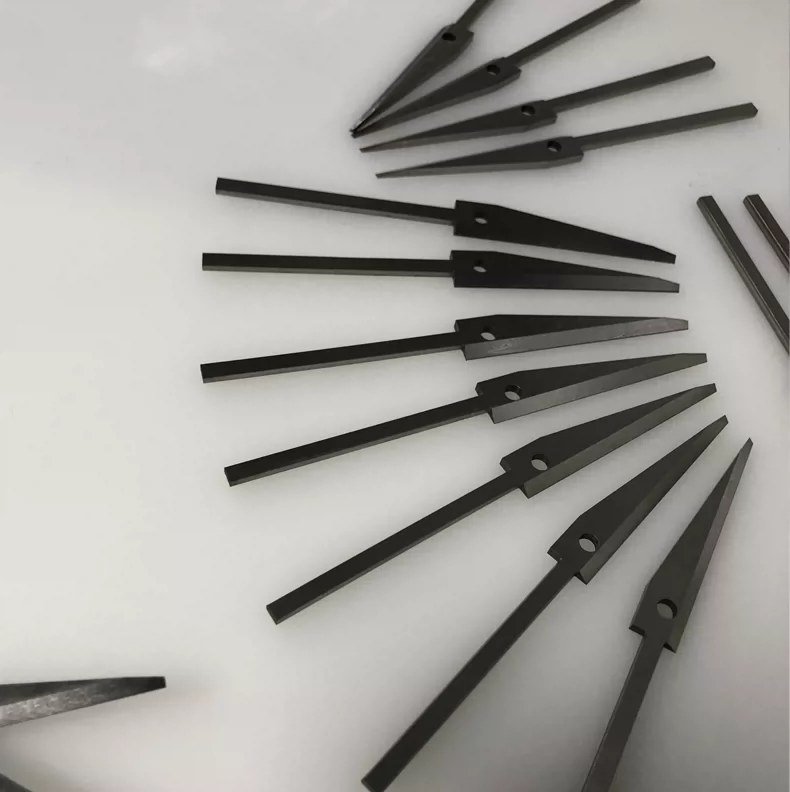
Textile & fabric blades built to your spec
Our custom textile and fabric cutting blades are made to your exact profile, edge, and tooth geometry. Whether you cut woven, knitted, or nonwoven fabric, we match the blade your line needs — and we can reverse engineer the blade from your worn sample if the drawing is gone.
Materials we cut from
- D2 / SKD11 — high-wear tool steel for long production runs.
- HSS — heat-resistant edges for higher surface speeds.
- Stainless — food- and pharma-grade lines.
- Solid carbide — maximum edge life on abrasive materials.
Why buyers switch their blades to HIBO
Free sample (you cover freight), a 24-hour quote, and a 30-day production lead — versus the 35–45 days most overseas suppliers quote.
Typical applications
Apparel and garment cutting, technical textile slitting, nonwoven and hygiene lines, and upholstery and leather cutting. If your line cuts fabric, we supply the industrial cutting blade for it.
What the geometry has to get right
Fabric and nonwoven cutting is decided by the cutting method before the blade. Cold shear gives a clean edge that can fray; hot cutting seals the edge and dulls the blade faster; ultrasonic needs a tuned blade and shows wear as a weak seal rather than a bad cut.
Within one method, the edge has to be keen enough to part the fibre without pulling it, and robust enough to survive the speed the line runs at.
Where a textile blade fails
- Frayed edge on cold cutting. Edge dull, or insufficient anvil support.
- Melted or hardened edge on hot cutting. Heat, not wear.
- Intermittent seal on ultrasonic. Horn and tuning first; blade second.
- Edge pulling fibres. Edge form, or a burr on the cutting side.
How we match an existing blade
Send the worn blade and tell us the cutting method. The same fabric behaves differently across cold, hot and ultrasonic, so the recommendation depends on which one you run.
Textile blade questions
Do you supply blades for mask machines?
Yes — long straight blades for the stack, and replacement heads for pneumatic air scissors. Tell us which one you need; they fail for different reasons.
Can you supply a serrated edge?
Yes, where the machine uses one. Send the existing blade so we match tooth pitch and depth.
Cutting nonwoven for masks or hygiene products? See the mask machine blade size chart and the air scissors cutter heads we supply for those lines.
Browse all blades by type
Need a blade to a drawing?
Send the drawing or the worn blade. Free sample, you cover the freight.